
The relationship between motion blur and human vision is a fascinating intersection of biology, perception, and technology. When we observe fast-moving objects or shift our gaze rapidly, our eyes and brain work together to interpret these changes, often resulting in the perception of blur. This phenomenon not only affects how we see the world but also influences fields like photography, digital graphics, and visual effects.
Understanding how our eyes process motion and why blur occurs can help photographers, designers, and even gamers create more realistic and comfortable visual experiences. For a deeper dive into how these effects are used creatively, you might find the motion blur effect in graphic design guide helpful.
How Our Eyes Perceive Motion and Blur
Human vision is highly adaptive, allowing us to process a wide range of visual information. When objects move quickly across our field of view, or when we move our eyes rapidly (a process called saccades), the image projected onto our retinas shifts rapidly as well. Our brains are remarkably skilled at interpreting these changes, but there are limits to how quickly we can process visual information.
Motion blur occurs when the speed of movement exceeds our visual system’s ability to keep up. This results in a smeared or streaked appearance, which is not just a camera artifact but a real perceptual effect. Our eyes use a combination of rapid eye movements, predictive tracking, and neural processing to minimize blur, but under certain conditions—like watching a fast-moving car or a spinning object—blur becomes inevitable.
Biological Mechanisms Behind Motion Blur in Vision
The human eye contains specialized cells called photoreceptors (rods and cones) that detect light and color. When an object moves quickly, the image sweeps across these cells faster than they can respond, leading to the sensation of blur. Additionally, the brain integrates information over short periods, which can further contribute to the effect.
Saccadic suppression is another important factor. During rapid eye movements, our brains temporarily reduce visual sensitivity to prevent overwhelming blur. This natural adaptation helps us maintain a stable perception of the world, even when our eyes are darting from one point to another.

Motion Blur in Photography and Its Link to Human Perception
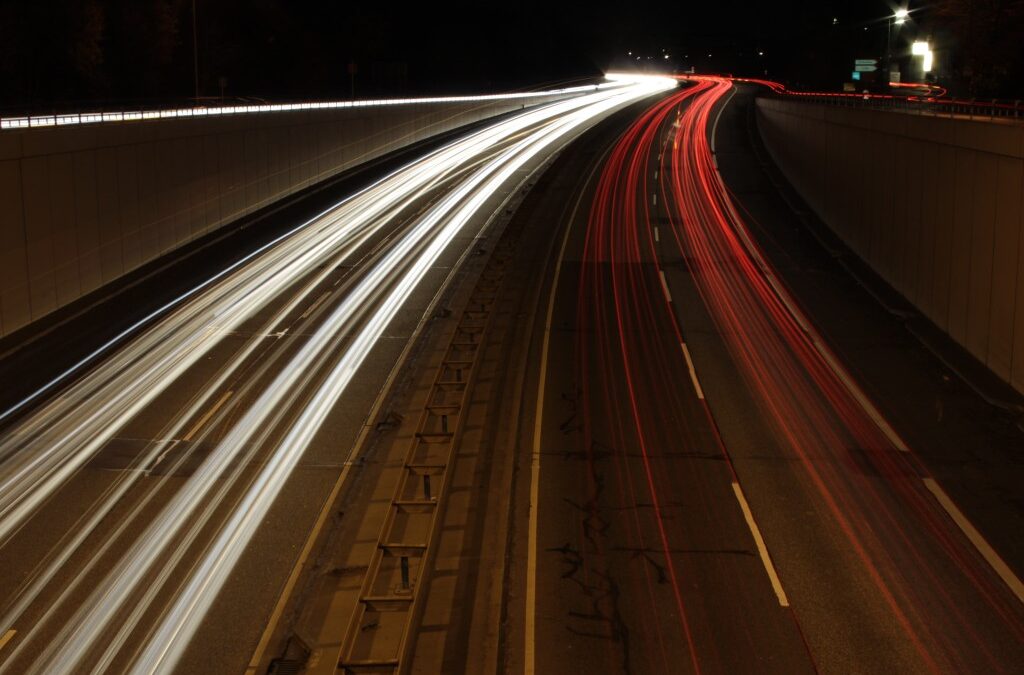
Photographers often use motion blur intentionally to convey speed, movement, or emotion. This technique mimics the way our eyes perceive fast motion, making images feel more dynamic and lifelike. The connection between motion blur and human vision is especially evident in long-exposure photography, where moving subjects appear as streaks or soft trails.
For those interested in capturing this effect, learning about how to capture motion blur in photography can provide practical tips and creative inspiration. By understanding the parallels between camera sensors and the human eye, photographers can create images that resonate with viewers on a perceptual level.
Applications in Digital Graphics and Gaming
The concept of motion blur and human vision extends beyond real-world observation into the digital realm. In video games and computer graphics, motion blur is often simulated to enhance realism and reduce visual discomfort. When scenes move quickly, adding blur can help mimic the natural limitations of human perception, making animations appear smoother and less jarring.
Developers use various techniques to replicate this effect, such as frame blending and vector-based blurring. These methods are designed to match the way our eyes process motion, improving immersion and comfort for players. For a technical breakdown of these approaches, you might explore topics like motion blur in gaming graphics or motion blur in 3d rendering.

Comparing Natural and Artificial Blur Effects
While both natural and digital motion blur share similarities, there are important differences. The blur we perceive with our eyes is influenced by biological factors like eye movement, neural processing, and adaptation. In contrast, artificial blur in images or graphics is generated through algorithms and can be precisely controlled.
Understanding these distinctions is key for artists and designers who want to create visuals that feel authentic. For example, the debate between motion blur vs gaussian blur highlights how different types of blur can evoke unique responses in viewers. Choosing the right technique depends on the desired effect and the context in which the image will be viewed.
Everyday Examples of Motion Blur in Human Experience
We encounter motion blur in daily life more often than we realize. Watching cars zip by on a highway, observing athletes in action, or even glancing out of a moving train window all produce this visual phenomenon. Our brains are adept at filtering and interpreting these blurred signals, allowing us to focus on important details while ignoring irrelevant information.
This selective attention is a testament to the sophistication of our visual system. By studying how we perceive and process blur, scientists and designers can develop better tools, interfaces, and experiences that align with our natural abilities.
FAQ: Understanding Motion Blur and Visual Perception
Why do we see blur when objects move quickly?
Blur occurs when an object moves faster than our eyes and brain can process. The image sweeps across the retina rapidly, and our visual system integrates this information over a short period, resulting in a smeared appearance.
How does motion blur in photography relate to human vision?
Motion blur in photos mimics the way our eyes perceive fast movement. By using slower shutter speeds, photographers can replicate the streaks and softness that occur naturally when we observe rapid motion.
Can digital motion blur reduce eye strain in games and videos?
Yes, adding blur to fast-moving scenes in digital media can make animations appear smoother and more comfortable to watch. This technique aligns with the limitations of our visual system, helping to reduce discomfort and enhance realism.