
The manufacturing landscape is undergoing a significant transformation, driven in large part by the rapid adoption of 3D printing technologies. Once considered a niche tool for prototyping, additive manufacturing now plays a central role in production lines across industries. Companies are leveraging these advancements to streamline operations, reduce costs, and create innovative products that were previously impossible to manufacture using traditional methods.
As the demand for customization, efficiency, and agility grows, understanding how 3D printing is changing manufacturing has become essential for businesses aiming to stay competitive. This article explores the core ways additive manufacturing is reshaping production, from design flexibility to supply chain optimization, and highlights practical insights for manufacturers considering this technology.
For those interested in the broader digital transformation of factories, our introduction to factory edge computing provides valuable context on how advanced technologies are converging to drive smarter, more connected production environments.
Key Drivers Behind Additive Manufacturing’s Rise
Several factors are fueling the adoption of 3D printing in the industrial sector. The ability to produce complex geometries, reduce material waste, and accelerate product development cycles are among the most compelling advantages. Unlike subtractive manufacturing, which removes material to create parts, additive processes build objects layer by layer, enabling unprecedented design freedom.
- Rapid prototyping: Engineers can quickly iterate on designs, reducing time-to-market for new products.
- Customization at scale: Manufacturers can efficiently produce small batches or even one-off items tailored to specific customer needs.
- Supply chain resilience: On-demand production minimizes inventory requirements and mitigates disruptions.
- Material efficiency: Additive methods often use less raw material, lowering costs and environmental impact.
Transforming Product Design and Development
One of the most profound impacts of 3D printing in manufacturing is the shift in how products are designed and brought to market. Traditional manufacturing often imposes constraints on geometry and assembly, but additive techniques remove many of these barriers.
Designers can now create lightweight structures, intricate internal channels, and consolidated assemblies that would be impossible or prohibitively expensive to produce otherwise. This flexibility not only enhances product performance but also enables faster innovation cycles.
Enhancing Production Efficiency and Flexibility
The integration of additive manufacturing into production lines is enabling companies to respond more quickly to market changes and customer demands. By producing components on-site and on-demand, manufacturers can reduce lead times, minimize warehousing needs, and avoid costly overproduction.
This agility is especially valuable in industries such as aerospace, automotive, and healthcare, where parts may need to be customized or replaced rapidly. For example, spare parts can be printed as needed, reducing downtime and maintenance costs.
Reducing Waste and Supporting Sustainability
Sustainability is a growing priority in the industrial sector, and additive manufacturing offers several environmental benefits. Because 3D printing uses only the material required to build a part, it generates less scrap compared to traditional machining. Additionally, the ability to produce lightweight components can contribute to energy savings, particularly in transportation and aerospace applications.
Impact on Supply Chains and Smart Factories
The shift toward digital manufacturing is also transforming supply chain strategies. With the ability to produce parts locally and on demand, companies are less reliant on complex global logistics networks. This reduces exposure to disruptions and allows for more responsive, customer-centric operations.
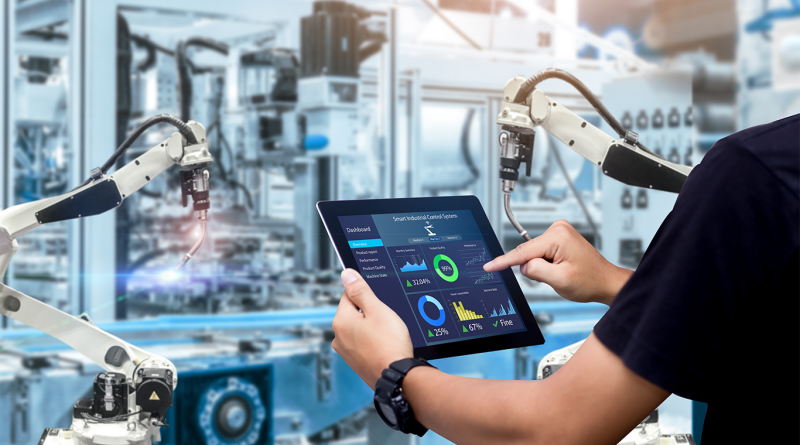
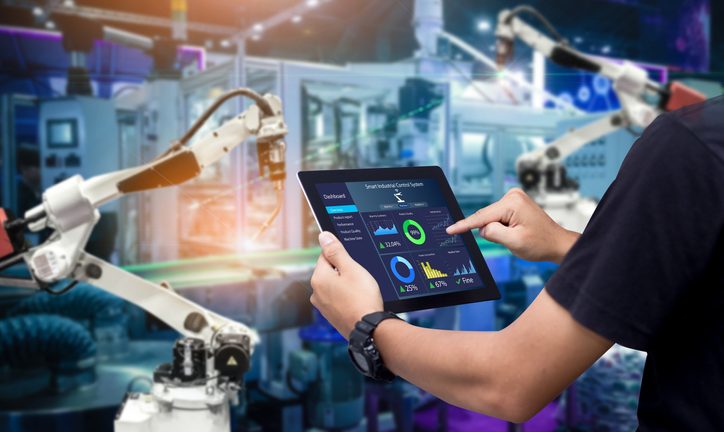
Additive manufacturing is a key enabler of the smart factory concept, where digital systems, automation, and real-time data converge to optimize production. By integrating 3D printers with factory automation systems, manufacturers can achieve greater visibility, control, and efficiency across their operations.
Challenges and Considerations for Adoption
While the benefits of 3D printing in manufacturing are clear, there are also challenges to consider. Material limitations, post-processing requirements, and the need for skilled operators can present hurdles for some organizations. Additionally, ensuring quality and consistency at scale requires robust process controls and certification standards.
Manufacturers exploring additive technologies should carefully evaluate their application needs, invest in workforce training, and consider how 3D printing can complement existing production methods rather than replace them entirely.
Integrating Additive Manufacturing with Other Technologies
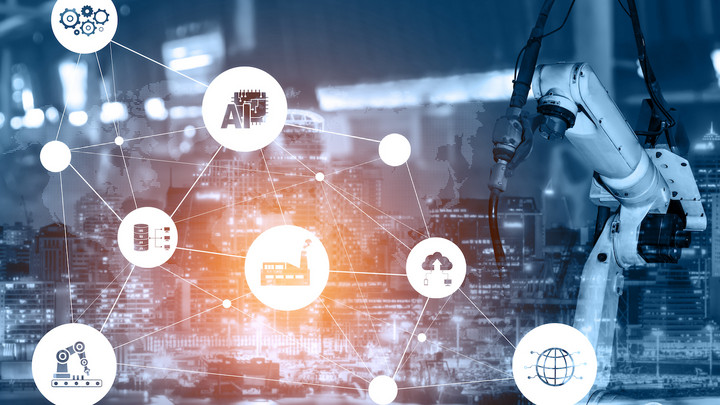
The full potential of additive manufacturing is realized when it is combined with other digital technologies. For example, integrating 3D printing with machine learning for production optimization or leveraging factory automation systems can unlock new levels of efficiency and quality control.
Cloud-based platforms and edge computing solutions are also playing a role in connecting printers, sensors, and analytics tools, allowing for real-time monitoring and predictive maintenance. For more on this, see our resource on how cloud computing helps factories operate smarter.
Frequently Asked Questions
What are the main benefits of using 3D printing in manufacturing?
The primary advantages include faster prototyping, reduced material waste, greater design flexibility, and the ability to produce customized or complex parts efficiently. These benefits help companies bring products to market more quickly and respond to changing customer needs.
Is additive manufacturing suitable for mass production?
While traditionally used for prototyping and small-batch production, advances in printer speed and material options are making additive manufacturing increasingly viable for larger-scale manufacturing. However, it is most effective for parts with complex geometries or where customization is required.
How does 3D printing support sustainability in industry?
Additive manufacturing minimizes waste by using only the material needed to build each part. It also enables local, on-demand production, which can reduce transportation emissions and inventory requirements, supporting more sustainable supply chains.
Looking Ahead: The Future of Additive Manufacturing
As technology continues to advance, the influence of how 3D printing is changing manufacturing will only grow. With ongoing improvements in materials, speed, and integration with digital systems, additive manufacturing is set to become a cornerstone of modern industrial production.
Companies that embrace these changes and invest in the right technologies will be well-positioned to innovate, reduce costs, and meet the evolving demands of the global market.