
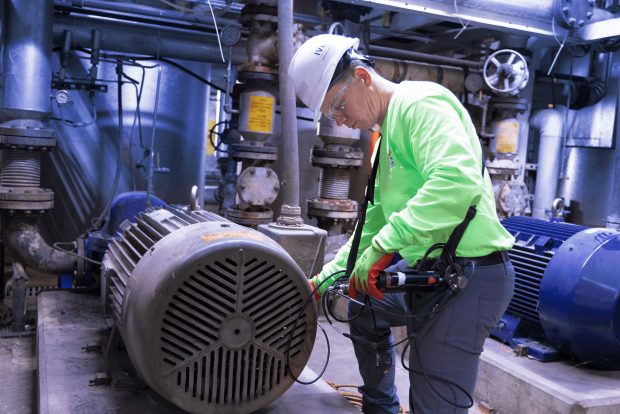
Edge computing for vibration monitoring is transforming how industries detect, analyze, and respond to machine health issues. By processing sensor data directly at or near the source, organizations can achieve faster insights, reduce network congestion, and enable real-time decision-making. This approach is especially valuable in sectors where equipment uptime and predictive maintenance are critical, such as manufacturing, energy, and transportation.
Traditional vibration monitoring methods often rely on sending large volumes of raw data to centralized servers or the cloud for analysis. This can introduce delays, increase bandwidth costs, and limit the ability to act quickly when anomalies are detected. In contrast, edge-based solutions bring intelligence closer to the machines, allowing for immediate detection of faults and more efficient use of resources.
For those interested in how these advances apply to specific industries, our resource on vibration analysis for power plants provides a detailed look at monitoring critical assets in high-stakes environments.
How Edge-Based Vibration Analysis Works
At the heart of modern vibration monitoring are sensors that capture high-frequency data from rotating machinery, motors, pumps, and other equipment. With edge computing, this data is processed locally—often on embedded devices or industrial gateways—using algorithms that can identify patterns, trends, and anomalies in real time.
This local processing is a significant departure from cloud-only approaches. Instead of transmitting every data point, edge devices filter, compress, and analyze information on-site. Only relevant events or summarized data are sent upstream, reducing network load and enabling faster response times.

A typical edge-enabled vibration monitoring system includes:
- Vibration sensors (accelerometers, velocity sensors, displacement sensors)
- Edge processors (industrial PCs, gateways, or microcontrollers)
- Analytics software for real-time fault detection and trend analysis
- Connectivity to local networks or cloud platforms for remote monitoring
This architecture ensures that critical insights are available immediately, even if connectivity to the cloud is intermittent or unavailable.
Key Benefits of Edge Computing in Vibration Data Processing
Implementing edge computing for vibration monitoring delivers several practical advantages:
- Real-time anomaly detection: Immediate processing allows for instant identification of abnormal vibration patterns, reducing the risk of unplanned downtime.
- Lower bandwidth usage: By transmitting only essential data, organizations save on network costs and avoid bottlenecks.
- Enhanced security: Sensitive machine data can be processed and stored locally, minimizing exposure to external threats.
- Scalability: Edge solutions can be deployed across large facilities or remote sites without overwhelming central servers.
- Reduced latency: Decisions can be made at the source, which is critical for time-sensitive applications like automatic shutdowns or alerts.
These benefits make edge-based approaches ideal for industrial environments where reliability and speed are paramount.
Applications Across Industries
The adoption of edge-enabled vibration monitoring is accelerating across a range of sectors:
- Manufacturing: Detecting bearing faults, misalignment, and imbalance in production lines to prevent costly breakdowns.
- Energy and utilities: Monitoring turbines, pumps, and generators in power plants and water treatment facilities for early warning of mechanical issues. For more on this, see our article on vibration analysis for food processing equipment and its impact on safety and uptime.
- Transportation: Ensuring the health of motors and gearboxes in rail, shipping, and automotive applications.
- Textile and food processing: Keeping looms and conveyors running efficiently by identifying wear or imbalance before it leads to stoppages. Explore our guide to vibration analysis for textile machinery for industry-specific insights.
By integrating edge intelligence, these industries can move from reactive maintenance to a more predictive, data-driven approach.
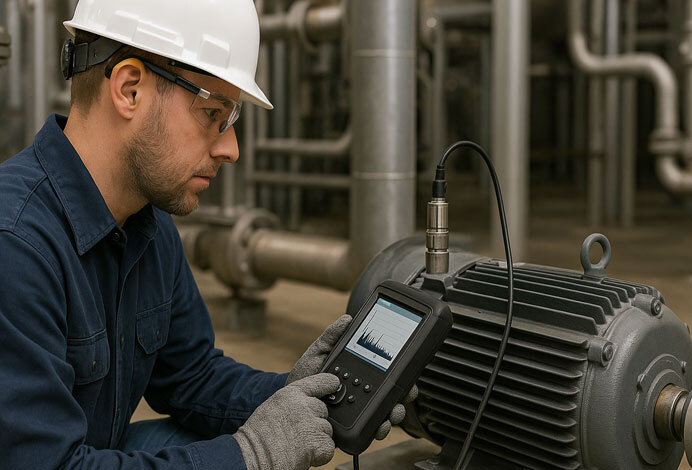
Edge Intelligence: From Raw Data to Actionable Insights
The real value of edge computing for vibration monitoring lies in its ability to turn raw sensor data into actionable insights. Advanced algorithms running at the edge can perform tasks such as:
- Fast Fourier Transform (FFT) analysis to identify frequency components linked to specific faults
- Envelope detection for early bearing defect identification
- Trend analysis to spot gradual deterioration over time
- Event-based notifications for maintenance teams
This localized intelligence reduces the need for manual data review and enables maintenance teams to focus on the most urgent issues. For those seeking a deeper understanding of interpreting vibration signals, our machine vibration data interpretation guide offers practical field tips.
Challenges and Considerations in Edge-Based Vibration Monitoring
While edge solutions offer many advantages, there are important considerations:
- Hardware selection: Edge devices must be rugged and reliable enough for industrial environments.
- Algorithm accuracy: On-device analytics must be robust to avoid false positives or missed faults.
- Integration: Seamless connectivity with existing SCADA, MES, or cloud systems is essential for a unified maintenance strategy.
- Security: Local processing reduces some risks, but edge devices must still be protected against unauthorized access.
Organizations should evaluate their specific needs, from the types of machines monitored to the volume of data generated, to design an effective edge-based system.
Future Trends: AI and Industrial IoT at the Edge
The next wave of innovation in this field combines edge computing for vibration monitoring with artificial intelligence and the Industrial Internet of Things (IIoT). Machine learning models can be deployed on edge devices to improve fault detection accuracy, predict failures, and even recommend corrective actions.
As more assets become connected, the ability to process and analyze data locally will be crucial for scaling predictive maintenance programs. For a broader perspective on how IIoT is reshaping maintenance, see our overview of industrial IoT maintenance applications.
To further explore the fundamentals of vibration analysis, the complete guide to vibration analysis from Fluke offers a comprehensive overview of techniques and best practices.
FAQ: Edge Computing and Vibration Monitoring
What types of faults can edge-based vibration monitoring detect?
Edge-enabled systems can identify a wide range of mechanical issues, including bearing defects, misalignment, imbalance, looseness, and gear faults. By analyzing vibration signatures in real time, these systems help maintenance teams address problems before they escalate.
How does edge computing reduce costs in vibration monitoring?
By processing data locally, edge solutions minimize the need to transmit large volumes of raw sensor data to central servers or the cloud. This reduces bandwidth expenses, lowers storage requirements, and enables faster, more targeted maintenance interventions.
Is edge computing suitable for remote or hazardous environments?
Yes, edge devices are often designed for rugged industrial use and can operate reliably in remote, hazardous, or harsh environments. Local processing ensures that critical insights are available even when connectivity is limited or intermittent.