
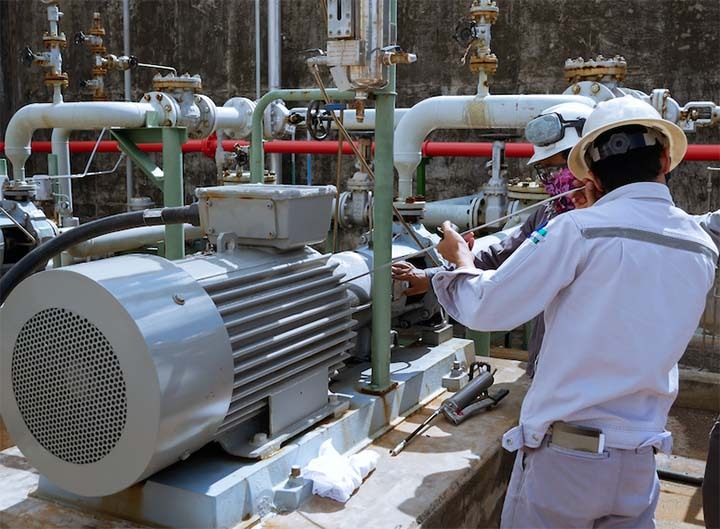
Vibration analysis is a cornerstone of predictive maintenance in modern industry, enabling organizations to detect mechanical issues before they escalate into costly failures. By monitoring the unique vibration patterns of machinery, engineers and maintenance teams can identify imbalances, misalignments, bearing faults, and other problems that may otherwise go unnoticed. Understanding how vibration analysis works is essential for anyone involved in equipment reliability, asset management, or industrial automation.
This guide explores the principles, tools, and practical applications of vibration monitoring, giving you a comprehensive technical overview. Whether you manage a power plant, pharmaceutical facility, or food processing line, mastering these concepts can help you optimize uptime and reduce maintenance costs. For industry-specific insights, see our detailed resource on vibration analysis for power plants.
Principles Behind Vibration Monitoring
Every rotating or moving machine produces vibrations as a byproduct of its operation. These vibrations are essentially oscillations of mechanical components, and their patterns can reveal a lot about the machine’s health. Vibration analysis techniques leverage the fact that different faults generate distinct vibration signatures. For example, an unbalanced rotor produces a different pattern than a failing bearing.
The core principle is that by measuring and analyzing these oscillations, maintenance teams can detect anomalies early. This proactive approach helps prevent unexpected breakdowns, reduces downtime, and extends equipment lifespan.
How Data Is Collected: Sensors and Hardware
The first step in the process is data acquisition. Specialized sensors called accelerometers are mounted on critical points of the machinery. These devices measure acceleration forces, which are then converted into vibration signals. Other types of sensors, such as velocity transducers and displacement probes, may also be used depending on the application.
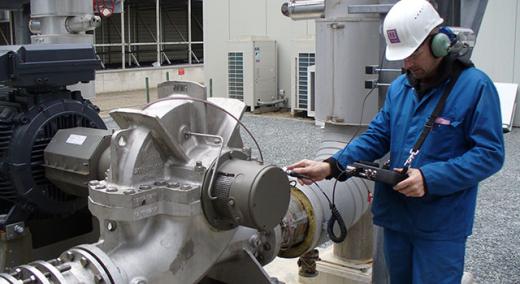
The placement of sensors is critical. They are typically installed near bearings, gearboxes, or other components where faults are likely to originate. The collected data is transmitted to a data acquisition system, which can be either portable (for periodic checks) or permanently installed for continuous monitoring.
Signal Processing and Data Analysis
Once vibration data is collected, it must be processed and analyzed. Raw signals are often complex and contain a mix of frequencies, amplitudes, and noise. To extract meaningful information, analysts use several mathematical tools:
- Time-domain analysis: Examines how vibration amplitude changes over time. Useful for detecting impacts or sudden changes.
- Frequency-domain analysis: Uses Fast Fourier Transform (FFT) to break down the signal into its component frequencies. This helps identify specific fault frequencies associated with different failure modes.
- Envelope analysis: Focuses on the amplitude modulation of high-frequency signals, which is effective for detecting bearing defects.
- Order analysis: Used for variable-speed machines, correlating vibration data with rotational speed to pinpoint issues.
Modern vibration analysis software automates much of this process, flagging anomalies and generating reports for maintenance teams.
Common Faults Detected by Vibration Analysis
The ability to detect a wide range of mechanical issues is a key advantage of vibration monitoring. Some of the most common faults include:
- Imbalance: Occurs when the mass of a rotating component is not evenly distributed, causing excessive vibration at a specific frequency.
- Misalignment: When shafts or couplings are not properly aligned, it leads to increased vibration and premature wear.
- Bearing defects: Faulty bearings produce characteristic vibration patterns, often detected through envelope analysis.
- Gearbox issues: Damaged gear teeth or lubrication problems generate unique frequency signatures.
- Looseness: Loose bolts or structural components cause irregular vibration patterns.
By identifying these problems early, organizations can schedule targeted maintenance and avoid unplanned outages.
Applications Across Industries
Vibration analysis is used in a wide range of sectors, from manufacturing to utilities. In pharmaceutical plants, it helps ensure compliance and uptime by monitoring critical assets. Food processing facilities rely on these techniques to maintain safety and equipment reliability. Textile and mining industries also benefit from continuous vibration monitoring to keep production lines and heavy machinery running smoothly.
Each industry has its own set of challenges and requirements, but the underlying principles remain the same: measure, analyze, and act on vibration data to maintain operational excellence.

Benefits of Understanding Vibration Analysis Techniques
Mastering the fundamentals of vibration monitoring offers several advantages:
- Early fault detection: Spotting issues before they cause failures reduces downtime and repair costs.
- Optimized maintenance: Enables condition-based maintenance instead of relying solely on scheduled intervals.
- Improved safety: Prevents catastrophic failures that could endanger personnel or damage equipment.
- Extended asset life: Regular monitoring helps extend the lifespan of critical machinery.
- Cost savings: Reduces unnecessary part replacements and emergency repairs.
For a deeper dive into the subject, the IBM overview of vibration analysis provides additional technical context and industry use cases.
Implementing a Vibration Monitoring Program
Setting up an effective vibration monitoring system involves several key steps:
- Asset selection: Identify which machines are most critical to operations and prioritize them for monitoring.
- Sensor installation: Place accelerometers and other sensors at strategic locations on the equipment.
- Data collection: Decide between periodic manual measurements or continuous online monitoring, depending on the asset’s importance.
- Data analysis: Use specialized software to process and interpret the vibration signals.
- Actionable insights: Develop maintenance plans based on the analysis, scheduling repairs or part replacements as needed.
- Continuous improvement: Regularly review and refine the program to maximize reliability and cost-effectiveness.
Integrating vibration analysis with other predictive maintenance tools, such as thermography or oil analysis, can further enhance your asset management strategy.
Challenges and Best Practices
While the benefits are clear, implementing vibration monitoring is not without challenges. Common hurdles include:
- Sensor placement: Incorrect installation can lead to inaccurate readings.
- Data overload: Large volumes of data require robust analysis tools and skilled personnel.
- Training: Interpreting vibration data accurately demands specialized knowledge.
- Integration: Ensuring compatibility with existing maintenance systems can be complex.
To overcome these challenges, follow best practices such as proper sensor calibration, regular training, and leveraging automated analysis software. Collaborating with experienced partners or consultants can also help streamline the process.
FAQ: Vibration Analysis Fundamentals
What types of equipment benefit most from vibration monitoring?
Rotating machinery such as motors, pumps, compressors, fans, gearboxes, and turbines are prime candidates for vibration analysis. Any equipment with moving parts can develop faults detectable through vibration patterns.
How often should vibration data be collected?
The frequency of data collection depends on the criticality of the asset and operating conditions. High-value or high-risk machines may require continuous monitoring, while less critical equipment can be checked periodically (weekly or monthly).
Can vibration analysis be used in harsh or remote environments?
Yes, modern wireless sensors and ruggedized data acquisition systems allow for effective vibration monitoring in challenging environments, including remote mining sites and hazardous industrial settings.
Where can I learn more about industry-specific applications?
For tailored guidance, explore our resources on vibration analysis for food processing equipment and vibration analysis for mining equipment.