

Spindle vibration analysis in CNC machines is a critical aspect of modern manufacturing, directly impacting machining accuracy, tool life, and equipment reliability. As CNC technology advances, the need for precise monitoring and control of spindle vibrations has become more important than ever. Excessive vibration can lead to poor surface finish, premature tool wear, and even catastrophic machine failure, making proactive analysis and intervention essential for any facility aiming for high productivity and quality.
Understanding how to detect, interpret, and address spindle vibrations can help manufacturers reduce downtime, extend equipment lifespan, and maintain consistent product quality. This article explores the fundamentals of vibration analysis for CNC spindles, practical methods for implementation, and the benefits of integrating this practice into your maintenance strategy.
For those interested in broader industrial applications, you may also want to explore vibration analysis for power plants, which shares many principles with CNC spindle monitoring but is tailored for large-scale assets.
Why Monitoring Spindle Vibrations Is Essential
CNC spindles operate at high speeds and are subject to significant mechanical loads. Even minor imbalances or misalignments can generate vibrations that compromise machining precision. Spindle vibration analysis in CNC machines provides early detection of issues such as bearing wear, imbalance, misalignment, and resonance, allowing for timely corrective action.
- Improved Product Quality: Vibration-induced errors can cause dimensional inaccuracies and poor surface finishes.
- Extended Tool Life: Reducing vibration minimizes tool chatter and breakage.
- Reduced Downtime: Early identification of faults prevents unexpected machine stoppages.
- Lower Maintenance Costs: Predictive maintenance based on vibration data is more cost-effective than reactive repairs.
How Spindle Vibration Analysis Works
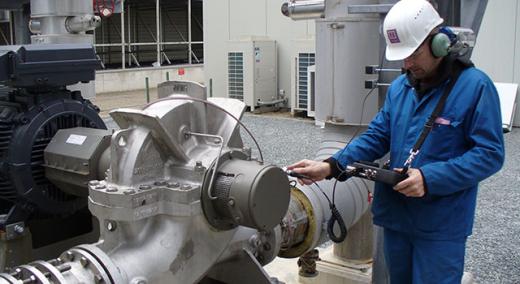
The process involves using sensors—typically accelerometers—mounted on or near the spindle housing. These sensors capture vibration signals, which are then analyzed using specialized software. The analysis focuses on parameters such as amplitude, frequency, and phase, helping to pinpoint the source and severity of any anomalies.
Key steps include:
- Sensor Placement: Proper positioning ensures accurate data collection. Sensors are usually mounted in the radial and axial directions.
- Data Acquisition: Vibration signals are recorded during machine operation, both at idle and under load.
- Signal Processing: Fast Fourier Transform (FFT) and other algorithms convert time-domain data into frequency-domain information, revealing patterns linked to specific faults.
- Diagnosis: By comparing measured values with baseline or manufacturer specifications, maintenance teams can identify issues like bearing defects, unbalance, or looseness.
For a deeper dive into the science behind vibration monitoring, IBM’s overview of vibration analysis techniques offers valuable insights into the broader field.
Common Causes of Spindle Vibration in CNC Equipment
Several factors can contribute to unwanted vibrations in CNC spindles. Understanding these root causes is crucial for effective troubleshooting and long-term reliability.
- Bearing Wear: Damaged or worn bearings are a primary source of abnormal vibration. Regular monitoring can detect early signs of failure.
- Imbalance: Uneven mass distribution in the spindle or attached tooling creates centrifugal forces that lead to vibration.
- Misalignment: Incorrect alignment between the spindle and other machine components can introduce oscillations.
- Resonance: When the spindle’s natural frequency matches the excitation frequency, vibration amplitudes can spike dramatically.
- Tooling Issues: Worn, loose, or improperly mounted tools can amplify vibration effects.

Implementing Vibration Analysis in Your CNC Maintenance Program
Integrating spindle vibration analysis in CNC machines into your predictive maintenance routine requires a combination of hardware, software, and skilled personnel. Here are the practical steps to get started:
- Choose the Right Sensors: Select accelerometers with appropriate sensitivity and frequency range for your spindle speeds.
- Establish Baseline Measurements: Record vibration signatures of healthy spindles to serve as a reference for future comparisons.
- Schedule Regular Monitoring: Implement periodic checks—daily, weekly, or monthly—depending on machine criticality and usage.
- Train Your Team: Ensure maintenance staff understand how to interpret vibration data and recognize warning signs.
- Integrate with CMMS: Connect vibration data to your computerized maintenance management system for automated alerts and historical tracking.
For industries with specialized requirements, such as vibration analysis for pharmaceutical plants or vibration analysis for food processing equipment, adapting these principles can further enhance compliance and uptime.
Benefits of Proactive Spindle Monitoring
Facilities that embrace vibration analysis for their CNC spindles report several measurable advantages:
- Reduced Scrap Rates: By catching issues early, manufacturers avoid producing defective parts.
- Optimized Production Schedules: Maintenance can be planned around actual machine condition, not just fixed intervals.
- Longer Equipment Lifespan: Early intervention prevents minor faults from escalating into major failures.
- Enhanced Safety: Detecting excessive vibration reduces the risk of catastrophic spindle or tool breakage.
These benefits are not limited to CNC machining. Similar approaches are used in other sectors, such as vibration analysis for mining equipment and vibration analysis for textile machinery, highlighting the universal value of predictive monitoring.
Best Practices for Accurate Vibration Measurement
To ensure reliable results, follow these guidelines when performing spindle vibration analysis:
- Use Calibrated Equipment: Regularly calibrate sensors and data acquisition systems to maintain accuracy.
- Monitor Under Real Conditions: Measure vibrations during actual machining, not just at idle, to capture operational issues.
- Document All Findings: Keep detailed records of vibration levels, fault diagnoses, and corrective actions for trend analysis.
- Act Promptly: Address abnormal readings immediately to prevent further damage.
- Collaborate with OEMs: Consult machine and spindle manufacturers for recommended vibration thresholds and diagnostic procedures.
Frequently Asked Questions
What are the signs that a CNC spindle is experiencing excessive vibration?
Common indicators include unusual noise, poor surface finish on machined parts, visible tool marks, increased tool wear, and unexpected machine alarms. Regular vibration monitoring helps detect these issues before they escalate.
How often should spindle vibration be checked in a CNC machine?
The optimal frequency depends on machine usage and criticality. High-use or high-precision machines may require daily or weekly checks, while less critical equipment can be monitored monthly. Establishing a baseline and monitoring for deviations is key.
Can vibration analysis prevent all spindle failures?
While vibration monitoring is highly effective at detecting many common faults, it should be part of a comprehensive maintenance program that includes lubrication, alignment checks, and visual inspections. No single method can prevent every possible failure, but vibration analysis significantly reduces risk.
Conclusion
Spindle vibration analysis in CNC machines is a foundational tool for achieving high-precision manufacturing, reducing costs, and maximizing equipment uptime. By implementing regular monitoring, interpreting data accurately, and acting on early warnings, manufacturers can protect their investments and deliver superior products. As CNC technology continues to evolve, the importance of proactive vibration management will only grow, making it an essential practice for any forward-thinking facility.