

Industrial facilities rely on the smooth operation of critical machinery to maintain productivity and minimize costly interruptions. Vibration analysis for predictive maintenance has become a cornerstone of modern reliability strategies, enabling organizations to detect early warning signs of equipment failure and take proactive action. This guide explores the fundamentals, benefits, and practical implementation of vibration monitoring as a predictive tool in maintenance programs.
For those interested in broader approaches to minimizing unplanned stoppages, consider exploring ways to reduce downtime in candy manufacturing for additional insights into operational efficiency.
Understanding Vibration Monitoring in Maintenance
Vibration monitoring involves measuring oscillations in machinery components to assess their health and performance. Every rotating or moving asset produces a unique vibration signature. When components such as bearings, gears, or shafts begin to degrade, their vibration patterns change. By regularly tracking these patterns, maintenance teams can identify anomalies that signal developing faults long before they lead to breakdowns.
This approach is central to predictive maintenance, which aims to anticipate failures and schedule repairs only when necessary. Unlike reactive or time-based maintenance, predictive strategies reduce unnecessary interventions and extend equipment lifespan.
Why Use Vibration Analysis for Predictive Maintenance?
Integrating vibration monitoring into a predictive maintenance program offers several key advantages:
- Early Fault Detection: Subtle changes in vibration can reveal issues such as imbalance, misalignment, looseness, or bearing wear before they escalate.
- Reduced Downtime: By addressing problems proactively, organizations can plan repairs during scheduled outages, minimizing costly unplanned stoppages.
- Cost Savings: Preventing catastrophic failures avoids expensive repairs, secondary damage, and lost production.
- Extended Equipment Life: Timely interventions help maintain optimal operating conditions, reducing wear and prolonging asset lifespan.
- Enhanced Safety: Identifying mechanical issues before they become hazardous protects personnel and the facility.

How Vibration Analysis Works in Predictive Strategies
The process of using vibration analysis within a predictive maintenance framework typically involves several steps:
- Sensor Installation: Accelerometers or velocity sensors are mounted on critical points of machinery to capture vibration data.
- Data Collection: Sensors record vibration signals either continuously or at scheduled intervals. Data can be gathered manually or via automated systems.
- Signal Processing: Raw vibration signals are converted into usable information using techniques such as Fast Fourier Transform (FFT), which breaks down complex signals into frequency components.
- Analysis and Diagnosis: Maintenance teams or specialized software interpret the processed data, looking for patterns that indicate specific faults (e.g., bearing defects, imbalance, misalignment).
- Action Planning: When abnormal patterns are detected, maintenance can be scheduled before a failure occurs.
For a deeper technical dive, the TWI Global FAQ on vibration analysis provides an excellent overview of the science and technology behind these techniques.
Common Faults Detected by Vibration Monitoring
Vibration analysis is particularly effective at identifying a range of mechanical issues, including:
- Imbalance: Uneven distribution of mass in rotating components causes excessive vibration at specific frequencies.
- Misalignment: Incorrect alignment between coupled shafts or components leads to characteristic vibration signatures.
- Bearing Defects: Wear or damage in rolling element bearings produces high-frequency vibrations and harmonics.
- Gearbox Problems: Faulty gears generate distinct frequency patterns related to gear mesh and tooth defects.
- Looseness: Loose bolts or mounts result in irregular, often broadband vibration signals.
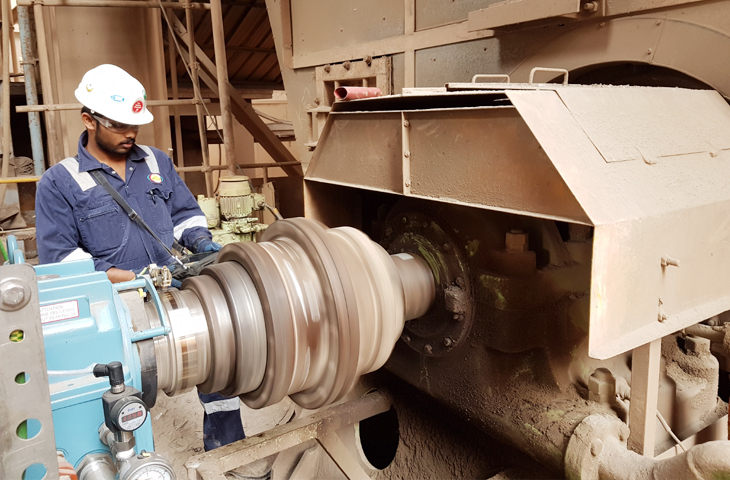
Implementing a Vibration-Based Predictive Maintenance Program
Adopting vibration monitoring as part of a predictive maintenance strategy requires careful planning and execution. Here are the essential steps for successful implementation:
1. Asset Criticality Assessment
Begin by identifying which machines are most vital to your operations. Focus resources on assets where failure would have the greatest impact on safety, production, or costs.
2. Sensor Selection and Placement
Choose appropriate sensors based on the type of equipment and expected fault modes. Proper placement is crucial—sensors should be installed at locations most likely to reveal early signs of trouble, such as bearing housings or gearbox casings.
3. Data Acquisition and Management
Establish a routine for data collection, whether through handheld devices or permanently installed systems. Ensure that data is stored securely and is accessible for analysis over time.
4. Analysis Tools and Expertise
Invest in software capable of advanced signal processing and pattern recognition. Train personnel in interpreting vibration data, or partner with specialists if in-house expertise is limited.
5. Integration with Maintenance Planning
Link vibration monitoring results to your maintenance management system. Use findings to trigger work orders, schedule inspections, or plan repairs during planned downtime.
Best Practices for Effective Vibration Monitoring
- Baseline Measurements: Record vibration signatures when equipment is new or after major overhauls to establish a reference point.
- Consistent Data Collection: Gather data under similar operating conditions to ensure comparability over time.
- Trend Analysis: Monitor changes in vibration levels and frequencies, not just absolute values, to spot gradual deterioration.
- Regular Calibration: Keep sensors and data acquisition systems calibrated for accurate readings.
- Cross-Functional Collaboration: Involve operators, maintenance, and reliability engineers to interpret results and take timely action.
Applications Across Industries
While vibration analysis is widely used in heavy industries such as manufacturing, power generation, and oil & gas, its principles apply to any sector with rotating or reciprocating machinery. Food processing plants, for example, use predictive tools to maintain equipment reliability and product quality. If you’re interested in predictive approaches in food production, see how predictive tools for egg shell integrity are being used to improve safety and efficiency.
Challenges and Considerations
Despite its advantages, implementing vibration-based predictive maintenance comes with challenges:
- Initial Investment: Sensors, software, and training require upfront costs, though these are often offset by long-term savings.
- Data Overload: Large volumes of data can overwhelm teams without proper filtering and analysis tools.
- Skill Requirements: Accurate diagnosis depends on skilled analysts or advanced software capable of distinguishing between benign and problematic patterns.
- Integration: Ensuring seamless communication between vibration monitoring systems and maintenance planning tools is essential for timely action.
Frequently Asked Questions
What types of equipment benefit most from vibration monitoring?
Rotating machinery such as motors, pumps, fans, compressors, and gearboxes are ideal candidates. Any asset where mechanical faults can develop gradually is a good fit for vibration-based predictive strategies.
How often should vibration data be collected?
The frequency depends on the criticality of the asset and operating conditions. High-risk equipment may require continuous monitoring, while less critical assets can be checked weekly or monthly. Consistency is key for effective trend analysis.
Can vibration analysis predict all types of failures?
While highly effective for detecting mechanical issues like imbalance, misalignment, and bearing wear, vibration monitoring may not identify electrical faults or process-related problems. It is best used in combination with other predictive maintenance techniques.
Conclusion
Adopting vibration analysis for predictive maintenance empowers organizations to move from reactive repairs to proactive reliability management. By continuously monitoring the health of critical assets, maintenance teams can prevent unexpected failures, optimize repair schedules, and maximize equipment uptime. As technology advances and data analytics become more accessible, vibration monitoring will remain a key component of efficient, cost-effective maintenance programs across industries.