
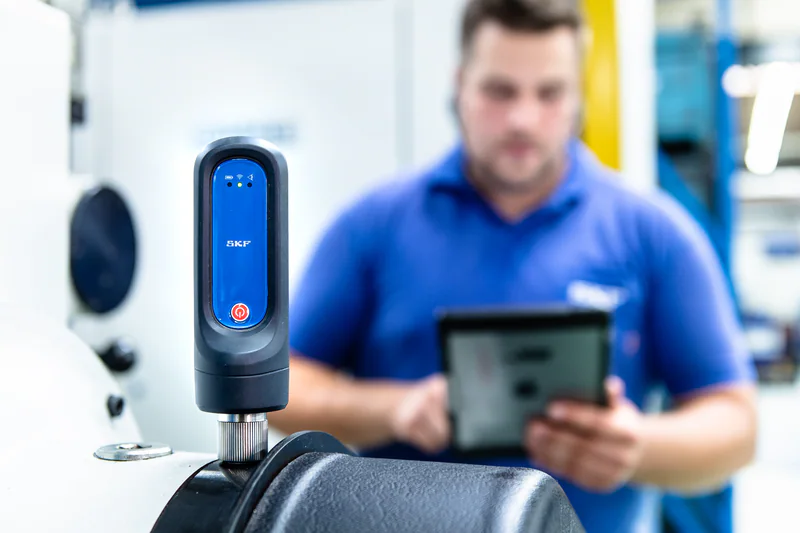
Bearings are critical components in rotating machinery, and their failure can lead to costly downtime, safety risks, and expensive repairs. How to identify bearing defects early is a top priority for maintenance teams across industries. Vibration analysis stands out as one of the most effective and non-invasive techniques for detecting bearing issues before they escalate. By monitoring the vibration patterns of equipment, maintenance professionals can spot subtle changes that indicate developing faults, allowing for timely intervention and improved reliability.
This article explores practical steps and proven strategies for using vibration analysis to pinpoint bearing problems. We’ll cover the fundamentals, key defect indicators, and actionable tips for interpreting vibration data. For those interested in sector-specific applications, you can also learn more about vibration analysis for power plants and how it supports critical asset monitoring.
Understanding Bearing Defects and Their Impact
Bearings are designed to support rotating shafts and reduce friction. Over time, they are subject to wear, contamination, misalignment, and lubrication issues. Common defects include:
- Outer race faults: Damage or wear on the outer ring of the bearing.
- Inner race faults: Defects on the inner ring where the shaft sits.
- Rolling element faults: Issues with the balls or rollers inside the bearing.
- Cage defects: Problems with the separator that keeps rolling elements spaced.
If left undetected, these faults can lead to increased vibration, heat, and ultimately catastrophic failure. Early detection is crucial for minimizing downtime and extending equipment life.
Principles of Vibration Analysis for Fault Detection
Vibration analysis involves measuring the oscillations of a machine or component using sensors such as accelerometers. These sensors capture vibration signals, which are then analyzed to identify patterns associated with specific defects. The process typically includes:
- Data collection: Sensors are mounted on the bearing housing to record vibration data during operation.
- Signal processing: The raw data is converted into frequency spectra using Fast Fourier Transform (FFT) or similar techniques.
- Pattern recognition: Analysts interpret the frequency spectra to spot characteristic fault frequencies and amplitudes.

Each type of bearing fault generates a unique vibration signature. By comparing these signatures to known defect frequencies, maintenance teams can accurately diagnose issues.
Key Vibration Indicators for Bearing Faults
When learning how to identify bearing defects with vibration analysis, it’s important to focus on specific indicators:
- Overall vibration amplitude: An increase in overall vibration levels often signals developing problems, but it’s not specific to bearings.
- Frequency analysis: Each bearing defect produces vibrations at certain frequencies, known as bearing fault frequencies (BPFI, BPFO, BSF, FTF). These can be calculated based on bearing geometry and shaft speed.
- Envelope analysis: This technique isolates high-frequency impacts caused by defects, making it easier to detect early-stage faults that may be masked by other machine vibrations.
- Sidebands and harmonics: The presence of sidebands around the defect frequency can indicate modulation due to looseness or advanced damage.
Monitoring these indicators over time helps distinguish between normal wear and actionable faults.
Step-by-Step Approach to Detecting Bearing Issues
To effectively use vibration analysis for bearing health assessment, follow these steps:
- Establish baseline measurements: Record vibration data from healthy bearings to create a reference point for future comparisons.
- Schedule regular monitoring: Implement a routine monitoring schedule to track changes in vibration patterns over time.
- Analyze frequency spectra: Use FFT to convert time-domain signals into frequency-domain data. Look for peaks at calculated bearing fault frequencies.
- Apply advanced techniques: Utilize envelope analysis or demodulation to enhance detection of early-stage defects.
- Interpret results: Compare findings to baseline data and manufacturer specifications. Confirm suspected faults with additional tests if needed.
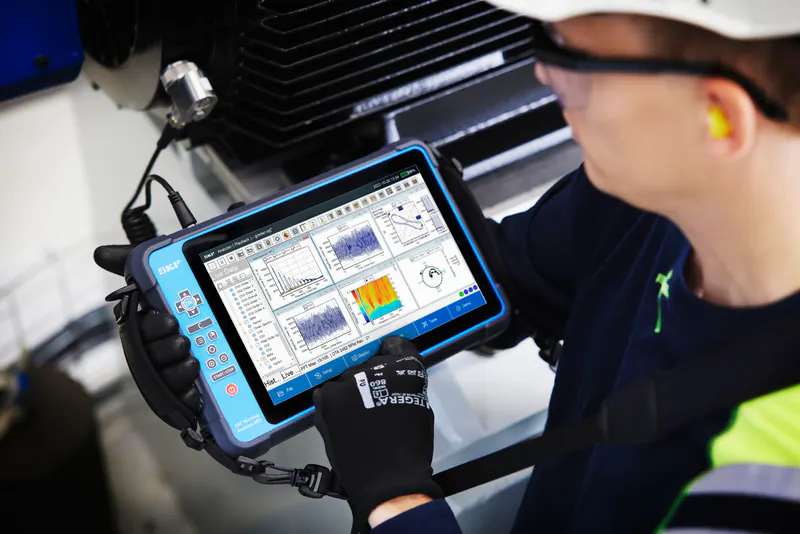
For a deeper dive into the technical aspects of vibration analysis, see this comprehensive guide on how vibration analysis works.
Common Challenges and Best Practices
While vibration analysis is a powerful tool, there are challenges to consider:
- Signal interference: Other machine components can produce vibrations that mask bearing fault signatures. Proper sensor placement and filtering are essential.
- Data interpretation: Accurate diagnosis requires experience and knowledge of both the equipment and vibration analysis principles.
- Environmental factors: Temperature, load, and speed variations can affect vibration readings. Always consider operating conditions when analyzing data.
To maximize the effectiveness of vibration monitoring:
- Train personnel in vibration analysis techniques and interpretation.
- Use high-quality sensors and data acquisition systems.
- Integrate vibration analysis with other predictive maintenance strategies, such as sensor based predictive maintenance and oil analysis.
- Document and trend vibration data for each asset to spot gradual changes.
Industry Applications and Case Examples
Vibration analysis is widely used in industries such as power generation, manufacturing, food processing, and textiles. For example, in the textile sector, continuous monitoring helps keep looms running efficiently by catching bearing wear before it leads to unplanned stoppages. Learn more about this in our article on vibration analysis for textile machinery.
In food processing plants, where hygiene and uptime are critical, vibration monitoring ensures that equipment runs smoothly and safely. For more details, see our insights on vibration analysis for food processing equipment.
Integrating Vibration Analysis with Modern Maintenance Strategies
Today’s industrial environments are increasingly adopting digital solutions for asset management. Vibration analysis can be integrated with Industrial IoT platforms, enabling real-time monitoring and automated alerts. This approach supports predictive maintenance, reduces manual inspections, and helps prioritize repairs based on actual equipment condition. Explore how industrial IoT maintenance applications are reshaping modern factories.
FAQ: Bearing Defect Detection and Vibration Analysis
What are the first signs of bearing failure detected by vibration analysis?
Early warning signs include increased overall vibration levels, the appearance of specific frequencies related to bearing geometry, and high-frequency impacts revealed through envelope analysis. These indicators often appear before audible noise or heat is noticeable.
How often should bearings be monitored for vibration?
The frequency of monitoring depends on the criticality of the equipment and operating conditions. For essential machinery, continuous or weekly monitoring is recommended. Less critical assets may be checked monthly or quarterly, but regular trending is key for early detection.
Can vibration analysis distinguish between different types of bearing defects?
Yes, by analyzing the frequency spectrum, it’s possible to identify whether the fault is on the outer race, inner race, rolling elements, or cage. Each defect type generates vibrations at characteristic frequencies, allowing for precise diagnosis when combined with proper analysis techniques.