
Maintaining precise product thickness is essential in modern manufacturing, especially in industries like food processing, packaging, and materials production. Even minor deviations can impact product quality, lead to waste, or cause compliance issues. Laser sensors have become a preferred solution for non-contact, real-time thickness measurement, offering accuracy and efficiency that traditional methods often lack.
This guide explores how manufacturers can leverage laser-based measurement systems to monitor and control product thickness. We’ll cover the core principles, practical setup steps, integration tips, and common challenges, ensuring you have a clear understanding of how to implement these technologies effectively.
For those interested in broader process optimization, you may also want to explore strategies for reducing variability in food batches, which can complement the use of laser-based thickness measurement.
Understanding Laser-Based Thickness Measurement
Laser sensors use optical triangulation or time-of-flight principles to measure distances with high precision. When applied to thickness control, two sensors are typically positioned on opposite sides of a product. By measuring the distance from each sensor to the product surface and subtracting these values from the known gap between the sensors, the system calculates the product’s thickness in real time.
Key benefits of using laser sensors for thickness monitoring include:
- Non-contact measurement: No mechanical wear or risk of contaminating the product.
- High speed and accuracy: Suitable for fast-moving production lines and thin materials.
- Continuous monitoring: Enables real-time quality control and immediate feedback.
- Versatility: Works with a wide range of materials, including food, plastics, metals, and paper.
Key Steps to Implementing Laser Sensors for Thickness Control
Getting started with laser-based thickness measurement involves careful planning and integration. Here’s a step-by-step overview:
1. Define Measurement Requirements
Start by specifying the range of thicknesses you need to measure, the required accuracy, and the speed of your production line. Consider the material properties—such as reflectivity, color, and surface texture—as these can affect sensor performance.
2. Select the Right Laser Sensor
Choose a sensor model that matches your application’s needs. Important factors include:
- Measurement range: Ensure the sensor can cover the minimum and maximum thicknesses.
- Resolution and accuracy: Higher precision may be necessary for thin or high-value products.
- Environmental resistance: Sensors should withstand dust, humidity, and temperature variations.
- Output compatibility: Verify that the sensor’s data output integrates with your control system (e.g., analog, digital, Ethernet).
3. Proper Sensor Installation
Mount the sensors securely on either side of the product’s path. Alignment is critical—both sensors must be perpendicular to the product surface and directly opposite each other to avoid measurement errors. Use vibration-dampening mounts if the production line is subject to movement.
Regular calibration is also necessary to maintain accuracy. Many modern sensors offer auto-calibration features, but periodic manual checks are recommended.
4. System Integration and Data Processing
Connect the sensors to your plant’s PLC or quality control system. Configure the software to calculate thickness by subtracting the measured distances from the known sensor-to-sensor gap. Set up alarms or automatic rejection for products that fall outside acceptable thickness tolerances.
For advanced applications, integrate the thickness data with other process analytics or predictive maintenance systems. For example, combining thickness measurements with predictive maintenance strategies in food production can help identify equipment issues before they cause defects.
Best Practices for Accurate Thickness Measurement
To maximize the benefits of laser-based thickness control, follow these best practices:
- Minimize environmental interference: Shield sensors from dust, steam, and direct light sources.
- Regularly clean optical surfaces: Accumulated debris can degrade measurement accuracy.
- Monitor sensor alignment: Misalignment can introduce systematic errors—check alignment during routine maintenance.
- Validate calibration: Use certified gauge blocks or reference materials to verify sensor accuracy.
- Document process changes: If you change materials or line speed, re-evaluate sensor settings and calibration.
For more on related process monitoring, see our article on how to detect belt misalignment automatically, which discusses additional automation strategies in food lines.
Common Challenges and Troubleshooting Tips
While laser sensors are highly reliable, some challenges can arise:
- Reflective or transparent materials: Highly shiny or clear products can cause signal loss or false readings. Specialized sensors or surface treatments may be needed.
- Vibration and movement: Excessive vibration can blur measurements. Use stable mounts and consider averaging multiple readings.
- Temperature fluctuations: Extreme changes can affect sensor electronics. Choose models rated for your environment and allow warm-up time.
- Electrical interference: Route sensor cables away from high-voltage lines and use shielded cables if necessary.
If persistent issues occur, consult the sensor manufacturer’s documentation or technical support for advanced troubleshooting.
Advantages of Laser Sensors Over Traditional Methods
Compared to mechanical gauges or manual calipers, laser-based thickness measurement offers several advantages:
- Speed: Instantaneous readings enable real-time process control.
- Non-destructive: No contact means no risk of damaging delicate products.
- Reduced labor: Automation frees up operators for higher-value tasks.
- Data integration: Easy to connect with digital quality management systems for traceability and analytics.
These benefits make laser sensors a compelling choice for manufacturers seeking to improve yield, reduce waste, and ensure consistent product quality.
FAQ: Laser Sensors for Thickness Monitoring
What types of products can be measured with laser sensors?
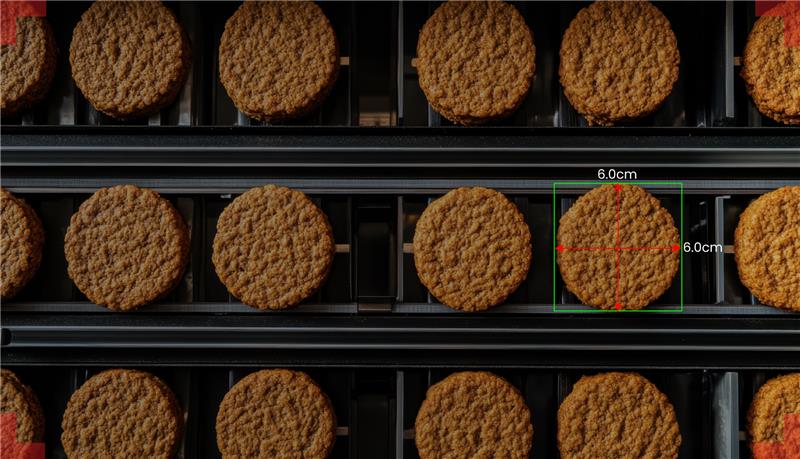
Laser-based thickness measurement is suitable for a wide range of products, including food items (such as biscuits, chocolate bars, and dough sheets), packaging materials, plastics, metals, and paper. The key is to select a sensor that matches the reflectivity and thickness range of your specific product.
How often should laser sensors be calibrated?
Calibration frequency depends on your process requirements and the stability of your environment. For most applications, a monthly calibration check is sufficient, but high-precision or regulated industries may require weekly or even daily verification. Always follow the sensor manufacturer’s recommendations.
Can laser sensors detect defects other than thickness variations?
Yes, many advanced laser sensors can also detect surface defects, warping, or dimensional inconsistencies. By analyzing the profile data, manufacturers can identify issues like bulges, dents, or uneven surfaces in addition to thickness deviations.
Are laser sensors difficult to integrate with existing production lines?
Most modern laser sensors are designed for straightforward integration, with standard output formats and mounting options. However, successful implementation requires careful planning regarding sensor placement, alignment, and data processing. Collaboration with automation engineers or system integrators can help ensure a smooth deployment.
Conclusion
Adopting laser-based thickness measurement can significantly enhance quality control and operational efficiency in manufacturing. By following best practices for sensor selection, installation, and maintenance, you can achieve reliable, real-time thickness monitoring across a variety of products and production environments. As automation and digitalization continue to advance, leveraging these technologies will be key to maintaining a competitive edge in quality and consistency.