

Compressors are essential components in a wide range of industrial processes, from manufacturing and chemical production to food processing and pharmaceuticals. Ensuring their reliable operation is critical to maintaining productivity and avoiding costly downtime. Vibration analysis for compressors has emerged as one of the most effective predictive maintenance techniques, enabling early detection of mechanical issues before they escalate into major failures.
This guide explores the fundamentals of vibration monitoring for compressors, the benefits it offers, and practical steps for implementing a successful program. Whether you oversee plant maintenance or are responsible for asset reliability, understanding how to leverage vibration data can help you extend equipment life, reduce unplanned outages, and optimize maintenance costs.
For those interested in how vibration monitoring applies to other heavy industries, you may also want to review our detailed overview of vibration analysis for steel manufacturing to see how similar principles are adapted for different assets and environments.
Why Vibration Monitoring Matters in Compressor Maintenance
Compressors are subject to a variety of mechanical stresses, including imbalances, misalignment, bearing wear, and looseness. Over time, these issues can lead to increased vibration levels, which, if left unchecked, may result in catastrophic failures. By routinely measuring and analyzing vibration signals, maintenance teams can:
- Detect early signs of mechanical problems such as bearing defects, rotor imbalance, or misalignment.
- Schedule repairs proactively, reducing the risk of unexpected breakdowns.
- Optimize maintenance intervals based on actual equipment condition rather than fixed schedules.
- Improve overall plant safety and reliability.
Implementing a structured approach to vibration analysis enables organizations to transition from reactive to predictive maintenance, minimizing both downtime and repair costs.
Key Concepts in Vibration Analysis for Compressors
To effectively monitor compressor health, it’s important to understand the basics of vibration measurement and interpretation. Here are some essential concepts:
- Amplitude: Indicates the severity of vibration. Higher amplitudes often signal more severe faults.
- Frequency: The rate at which a vibration occurs, typically measured in Hertz (Hz). Different faults produce characteristic frequencies.
- Waveform and Spectrum: Raw vibration signals (waveforms) are converted into frequency spectra using Fast Fourier Transform (FFT) for easier fault identification.
By analyzing these parameters, technicians can pinpoint the root cause of abnormal vibration and prioritize corrective actions.
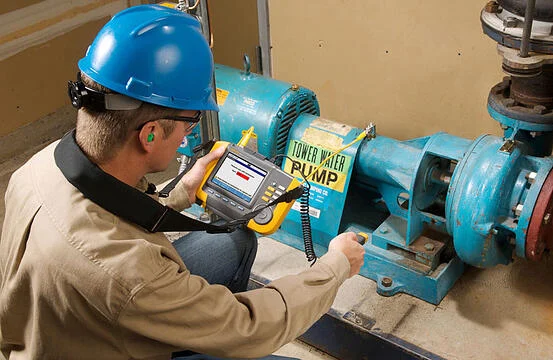
Common Compressor Faults Identified by Vibration Monitoring
Routine vibration checks can reveal a range of mechanical and operational issues in compressors. Some of the most frequently detected faults include:
- Bearing defects: Rolling element and journal bearings are prone to wear and pitting, which generate distinctive vibration signatures.
- Imbalance: Uneven mass distribution in rotating components causes increased vibration at the running speed.
- Misalignment: Incorrect alignment between the compressor and its driver (motor or turbine) leads to elevated vibration at specific frequencies.
- Looseness: Loose bolts or structural supports can result in erratic vibration patterns and increased risk of damage.
- Gear or coupling faults: Worn or damaged gears and couplings often produce harmonics and sidebands in the vibration spectrum.
Identifying these issues early allows for targeted interventions, preventing minor problems from escalating into major failures.
Setting Up a Vibration Monitoring Program
Establishing an effective vibration analysis program for compressors involves several key steps:
- Asset selection: Prioritize critical compressors whose failure would have the greatest operational impact.
- Sensor placement: Install accelerometers or velocity sensors at strategic locations, such as bearing housings and casing points, to capture representative data.
- Data collection: Use portable data collectors or permanently installed systems to gather vibration readings at regular intervals.
- Baseline establishment: Record normal operating vibration levels to serve as a reference for future comparisons.
- Analysis and trending: Apply FFT and other analytical techniques to identify deviations from baseline and track developing faults over time.
- Action planning: Develop maintenance strategies based on the severity and type of detected issues.
Proper training for maintenance personnel and collaboration with experienced analysts are crucial for accurate diagnosis and effective decision-making.
Best Practices for Reliable Vibration Analysis
To maximize the benefits of vibration monitoring for compressors, consider these best practices:
- Consistent measurement intervals: Collect data at regular, predefined intervals to ensure timely detection of developing faults.
- Environmental considerations: Account for temperature, humidity, and other environmental factors that may influence vibration readings.
- Calibration and maintenance of sensors: Regularly check and calibrate sensors to maintain data accuracy.
- Integration with other condition monitoring techniques: Combine vibration analysis with oil analysis, thermography, and ultrasound for a comprehensive view of compressor health.
- Data-driven decision making: Use historical data and trend analysis to inform maintenance planning and resource allocation.
Following these guidelines helps ensure that vibration monitoring delivers actionable insights and real value to your maintenance program.
Comparing Vibration Analysis Across Industries
While the core principles of vibration monitoring remain consistent, each industry adapts the approach to its unique operating conditions and asset types. For example, vibration analysis for power plants focuses on large turbines and generators, while vibration analysis for paper mills targets paper machines and related equipment. Understanding these differences can help you tailor your own program to the specific needs of your facility.
For additional insights into the broader field of vibration diagnostics, consider reviewing this comprehensive overview of vibration analysis techniques and their applications across various industries.
Integrating Vibration Analysis with Digital Maintenance Strategies
Modern maintenance programs increasingly leverage digital tools and data analytics to enhance reliability. Integrating vibration monitoring with computerized maintenance management systems (CMMS) or asset performance management (APM) platforms allows for automated data collection, real-time alerts, and advanced diagnostics. This digital transformation not only streamlines workflows but also enables predictive analytics, helping teams move from reactive to truly proactive maintenance.
Facilities that embrace digitalization can expect improved uptime, reduced maintenance costs, and a stronger return on investment from their compressor assets.
Frequently Asked Questions
How often should vibration measurements be taken on compressors?
The ideal frequency depends on the criticality of the compressor and its operating environment. For high-priority assets, weekly or even daily measurements may be appropriate. Less critical compressors can be monitored monthly or quarterly. The key is to establish a schedule that allows for early detection of developing faults without overburdening maintenance resources.
What are the warning signs that a compressor needs immediate attention?
Sudden increases in vibration amplitude, the appearance of new frequency peaks, or significant deviations from baseline levels are all indicators that a compressor may be developing a serious fault. Other warning signs include unusual noises, excessive heat, and changes in operating performance. Prompt investigation and corrective action are recommended when these symptoms are detected.
Can vibration analysis be used on all types of compressors?
Yes, vibration monitoring is applicable to most compressor types, including reciprocating, rotary screw, and centrifugal models. The specific measurement points and analysis techniques may vary depending on the compressor’s design and application, but the underlying principles remain the same.
Conclusion
Adopting a structured approach to vibration analysis for compressors is a proven way to enhance reliability, reduce downtime, and optimize maintenance costs. By understanding the fundamentals, implementing best practices, and leveraging digital tools, maintenance teams can ensure that compressors continue to operate efficiently and safely. For further reading on how vibration monitoring is adapted to other industries, explore our resources on vibration analysis for food processing equipment and vibration analysis for pharmaceutical plants.