
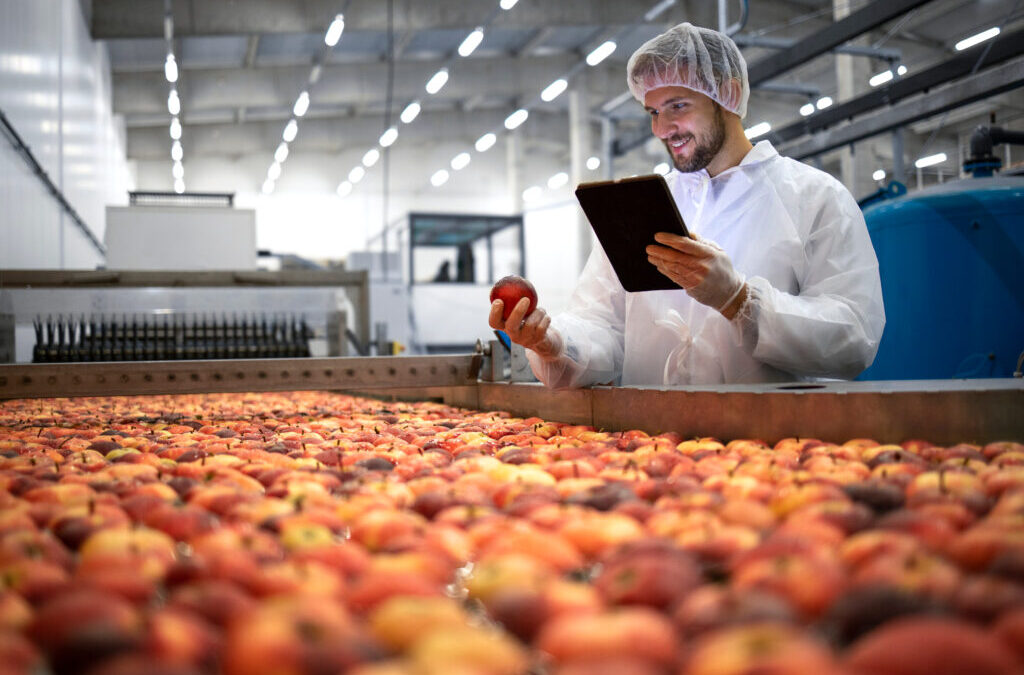
The food industry faces constant pressure to deliver products that are safe, high-quality, and consistent. As consumer expectations rise and regulatory standards tighten, manufacturers are turning to technology to streamline processes and minimize risks. Among the most impactful advancements are automated visual inspection systems, which use cameras, sensors, and artificial intelligence to monitor, assess, and control food production lines in real time.
These systems are transforming quality assurance by reducing human error, increasing efficiency, and ensuring that every product meets strict safety and quality criteria. In this guide, we’ll explore the main advantages of implementing automated inspection technology in food manufacturing, from improved compliance to cost savings and enhanced brand reputation.
For those interested in a broader perspective on food safety and predictive monitoring, you may also find value in our article on how predictive tools ensure haccp compliance, which discusses the role of advanced analytics in maintaining regulatory standards.
How Automated Visual Inspection Enhances Food Safety
Food safety is a top priority for producers and consumers alike. Automated visual inspection systems play a crucial role in detecting contaminants, foreign objects, and defects that may otherwise go unnoticed by manual checks. By using high-resolution cameras and sophisticated image analysis, these systems can identify anomalies in real time, ensuring that only products meeting safety standards proceed down the line.
This technology is especially effective for identifying issues such as:
- Physical contaminants (e.g., glass, metal, plastic fragments)
- Improperly sealed packaging
- Color or texture deviations indicating spoilage
- Labeling errors or misprints
By automating these inspections, manufacturers can respond instantly to potential hazards, reducing the risk of recalls and protecting public health.

Boosting Efficiency and Reducing Costs
One of the most significant benefits of automated visual inspection systems is their ability to streamline production and minimize operational costs. Unlike manual inspection, which can be slow and inconsistent, automated solutions work continuously and at high speed, keeping pace with modern production lines.
Key efficiency gains include:
- Faster throughput: Automated systems can inspect thousands of items per minute, far surpassing human capabilities.
- Consistent accuracy: Machine vision eliminates subjective judgments and fatigue-related errors, ensuring uniform quality checks.
- Lower labor costs: By reducing reliance on manual inspection, companies can allocate staff to higher-value tasks.
- Reduced waste: Early detection of defects prevents faulty products from advancing, minimizing material loss and rework.
For manufacturers seeking to prevent costly downtime, integrating automated inspection with predictive maintenance can be especially powerful. For more on this, see our resource on how to prevent downtime on bottling lines.
Ensuring Regulatory Compliance and Traceability
Compliance with food safety regulations is non-negotiable. Automated inspection systems help companies meet requirements set by authorities such as the FDA, USDA, and international bodies. By providing detailed records of every inspection, these systems support traceability and facilitate audits.
Data collected from visual inspections can be integrated with other quality management systems, offering a comprehensive view of production health. This is particularly valuable for meeting Hazard Analysis and Critical Control Points (HACCP) standards and demonstrating due diligence during regulatory reviews.
For an in-depth look at non-destructive testing and compliance, our guide to non-destructive testing in food processing offers further insights.

Improving Product Quality and Brand Reputation
Delivering consistently high-quality products is essential for building consumer trust and loyalty. Automated visual inspection systems help ensure that every item leaving the facility meets predefined quality standards, from appearance to packaging integrity.
By catching defects early, these systems reduce the likelihood of subpar products reaching store shelves. This not only minimizes returns and complaints but also strengthens the brand’s reputation for reliability and safety.
In a competitive market, companies that invest in advanced inspection technology can differentiate themselves as leaders in quality assurance.
Supporting Data-Driven Decision Making
Modern automated inspection solutions generate vast amounts of data, which can be analyzed to uncover trends, identify recurring issues, and optimize processes. By leveraging this information, food manufacturers can make informed decisions about process improvements, equipment upgrades, and staff training.
Integrating inspection data with other smart manufacturing tools—such as real-time equipment monitoring—enables a proactive approach to quality and maintenance. Learn more about this integration in our article on how to monitor equipment health in real-time.
Additionally, embracing predictive analytics can further enhance operational efficiency. For a broader perspective, see this overview of predictive maintenance in food and beverage manufacturing.
Key Takeaways: Why Food Manufacturers Are Adopting Automated Inspection
To summarize, the main benefits of automated visual inspection systems in food production include:
- Enhanced food safety through real-time detection of contaminants and defects
- Greater efficiency and lower operational costs
- Reliable compliance with regulatory standards and improved traceability
- Consistent product quality and stronger brand reputation
- Data-driven insights for continuous improvement
As technology continues to advance, these systems are becoming more accessible and adaptable, making them a smart investment for food manufacturers of all sizes.
Frequently Asked Questions
What types of defects can automated visual inspection systems detect in food production?
These systems can identify a wide range of issues, including physical contaminants (like glass or metal), packaging defects, incorrect labeling, color or texture inconsistencies, and missing or damaged components. Their adaptability allows them to be tailored to specific product requirements.
How do automated inspection systems help with regulatory compliance?
By providing consistent, documented inspection records, these solutions support compliance with food safety standards such as HACCP, FDA, and USDA guidelines. They also facilitate traceability and make audit processes more efficient by storing inspection data for review.
Are automated visual inspection systems suitable for small and medium-sized food businesses?
Yes, advancements in technology have made these systems more affordable and scalable. Many solutions can be customized to fit the needs and budgets of smaller operations, offering significant improvements in quality control and efficiency without requiring large-scale investment.